Data Residency vs. Survival: Reconciling Cross-Border Failover in the GCC
BCDR

Mahesh Chandran
CEO, Dataring
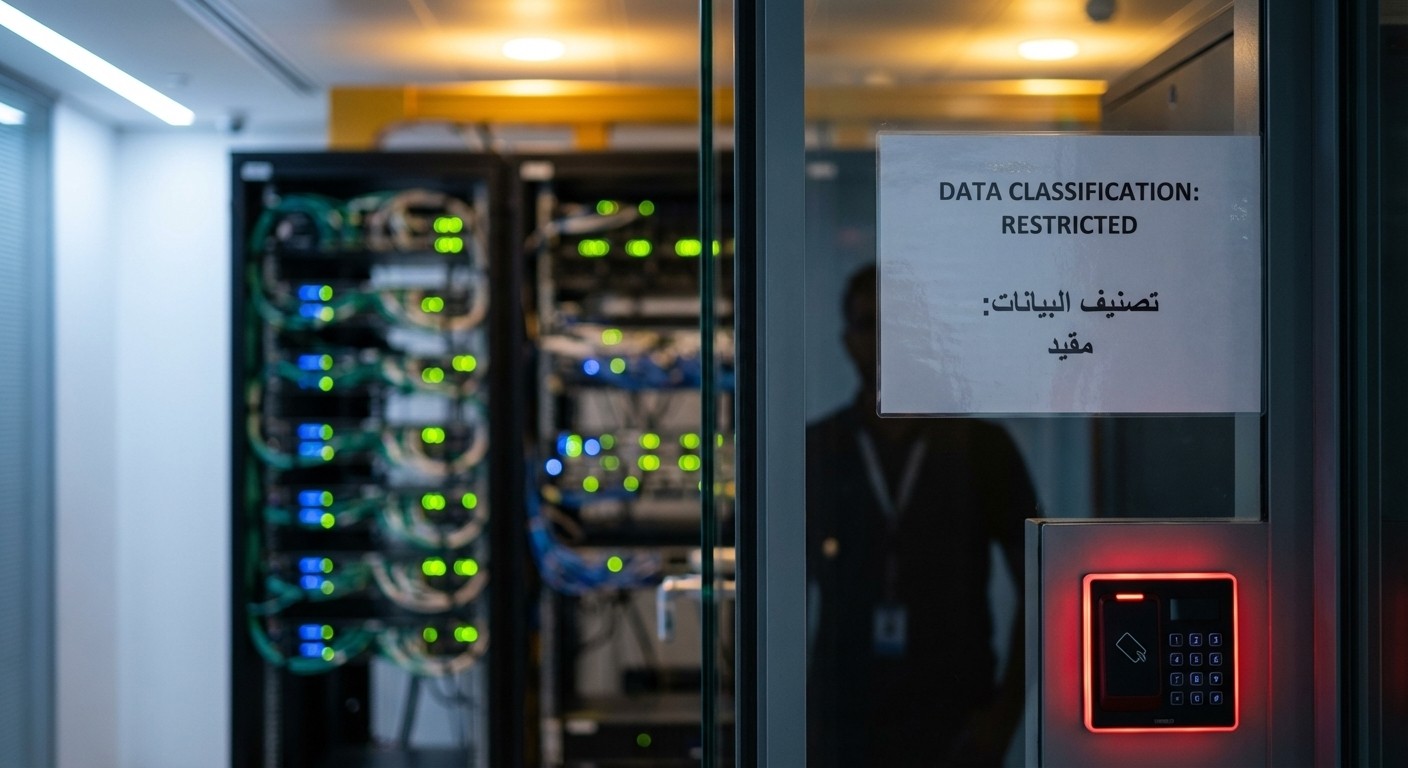
Two requirements that GCC regulators ask of regulated institutions can directly conflict. Data residency rules require certain categories of data to remain within the country. Recovery requirements ask institutions to demonstrate the ability to survive the loss of in-country infrastructure. Multi-AZ within a single GCC region used to paper over the conflict. After March 2026, that bridge no longer holds for Tier 0 workloads.
This post is about reconciling the two. It covers the residency landscape across Saudi Arabia, the UAE, and Qatar, the exception-framework mechanism that institutions use to handle emergency cross-border movement, and the architecture patterns that hold up under both lenses. For the broader compliance context, see our GCC requirements comparison. For the pattern selection logic, see our pattern decision guide.
The thesis
The residency-vs-survival problem is not primarily a technical problem. It is a regulatory engagement problem with a technical implementation. Institutions that try to solve it engineering-first end up either (a) violating residency, (b) sacrificing recoverability, or (c) building elaborate architectures that don't hold up to actual examination. The institutions that solve it well do the regulatory work first — specifically, the work of negotiating exception frameworks before a crisis — and then implement the technical architecture to enforce what the regulator has agreed to.
The residency landscape, briefly
Saudi Arabia
The strictest of the three. The PDPL and SAMA-issued sectoral guidance constrain certain categories of personal and financial data to remain within the Kingdom. The framework allows for some categories of cross-border processing under defined conditions, and emergency cross-border movement requires specific arrangements with the supervising regulator. Institutions that operate Tier 0 systems in Saudi Arabia and need cross-region DR cannot do that quietly; the regulatory engagement is part of the architecture work.
United Arab Emirates
More flexibility, more complexity. The federal Personal Data Protection Law (PDPL) sets baseline rules. Specific categories of data — health, financial, government — have additional sectoral residency requirements. Free zones (DIFC, ADGM) operate under their own data protection regimes (DIFC DP Law, ADGM Data Protection Regulations) that are closer to GDPR. Institutions operating across federal and free-zone jurisdictions navigate two different regimes simultaneously.
Qatar
An evolving framework. Banking-sector data is subject to QCB-issued residency expectations. The QFC operates under its own data protection regime that is closer to international standards. The general direction of travel is toward more specific residency rules; institutions should assume that current expectations are a baseline that will tighten, not loosen.
For the broader regulatory context across all three countries, see our GCC requirements comparison.
The five-element exception framework
In the engagements I've seen work in practice, exception frameworks for emergency cross-border data movement share five elements. Each element should be negotiated with the regulator and documented before a crisis, not improvised during one.
1. Triggering conditions
What event activates the exception? "Disaster" is too vague. Useful triggering conditions are specific and observable: declared regional infrastructure unavailability beyond a defined threshold, declared cybersecurity incident at a defined severity, or formal civil-emergency declaration by the relevant national authority. The regulator wants to know that the exception is not a routine bypass; the institution wants to know that the exception is reachable when actually needed.
2. Permitted destinations
Where can the data go? The exception should name specific allowed jurisdictions, often with preference ordering. "Any safe jurisdiction" is hard to enforce; "Frankfurt or Dublin, with Singapore as a fallback" is enforceable and auditable. Permitted destinations usually exclude jurisdictions that the regulator considers high-risk or that lack adequate data protection regimes.
3. Duration limits
How long can data remain outside the country once the exception is triggered? Most useful frameworks have a defined window (often 30 to 90 days) with a documented review point. Beyond the window, the institution must either repatriate or apply for an extension. The duration limit forces the institution to plan repatriation as part of the crisis response, not as an afterthought.
4. Controls during the exception period
What happens to the data once it has moved? Encryption requirements (typically including the requirement that decryption keys remain in-country), access controls (limited to named operators, fully audited), processing restrictions (typically limited to operations necessary for service continuity, no analytics or secondary use), and audit logging that satisfies the regulator's downstream examination.
5. Notification and reporting
Who gets notified, when, and with what information. Notification timelines are usually short (24 to 72 hours from exception activation) and require specific information: which datasets moved, which jurisdiction, which controls are in place, expected duration, and a named contact at the institution. Post-incident reporting requirements typically follow within 30 to 60 days.
Architecture patterns that satisfy both lenses
Pattern A1: In-country multi-region (preferred but limited)
Where the country has multiple cloud regions with adequate physical separation — currently true in Saudi Arabia and to a more limited degree in the UAE — the cleanest architecture is in-country multi-region with cross-region failover. Residency is satisfied because the data never leaves the country. Survival is satisfied because the regions are physically separated.
The limitation is geographic. "Physical separation" within a single country is constrained by the country's geography. For some scenarios (a regional cyber incident, a localized infrastructure failure), in-country separation is sufficient. For others (a coordinated event affecting multiple in-country facilities), it is not. The institution needs to be honest about which threat models the architecture covers.
Pattern A2: Sovereign-cloud pairing
Where a sovereign cloud or government-cloud arrangement exists in the country, pairing the primary commercial cloud with the sovereign equivalent provides a second failure domain that may also satisfy more stringent residency requirements. The architectural complexity is non-trivial — sovereign clouds have different service surfaces, different IAM models, different operational characteristics — and not every Tier 0 workload can be replatformed into a sovereign-cloud equivalent. Where it works, it works well. Where it doesn't, it fails noisily.
Pattern B: Encrypted cross-border with exception framework
For institutions whose threat model includes scenarios that in-country options don't cover, the practical pattern is encrypted cross-border replication paired with a pre-negotiated exception framework. Data replicates to a permitted destination (typically Europe, often Frankfurt or Dublin) in encrypted form. The decryption keys remain in-country, under the institution's KMS, accessible only when the exception is triggered. Day-to-day, the cross-border copy is opaque ciphertext. During an exception, the institution decrypts in the destination region and operates under the agreed controls.
This pattern requires the regulatory work to be done first. Implementing it without the exception framework in place creates a residency violation that activates only during a crisis, which is the worst possible time to discover one.
An implementation sequence
For institutions sitting down to design or update their residency-vs-survival architecture, the sequence I'd recommend is:
Step 1. Inventory the data. Each material dataset classified by sensitivity (PII, financial, health, etc.) and by residency rule (in-country only, in-country with exception, free movement). The classification is the foundation; without it, every downstream decision is made on partial information.
Step 2. Engage the regulator on exception frameworks for the datasets that need them. This is a multi-month process, not a quarterly project. The institutions I see succeed start the conversation early, share their threat models openly, and propose specific exception frameworks rather than asking the regulator to write one.
Step 3. Implement the architecture that the agreed framework permits. Encryption with in-country key custody. Replication to permitted destinations. Auditing that satisfies the regulator's notification and reporting requirements.
Step 4. Test it. The exception framework is a hypothesis until you have run a tabletop with regulator participation that exercises the triggering conditions, the notification timelines, and the controls. The first test will surface gaps; that's the point.
Tradeoffs and honest limitations
Exception frameworks are not always available. Some categories of data, in some jurisdictions, cannot move cross-border under any circumstance. Institutions that operate workloads on those datasets have to accept the residual risk and architect within the in-country options. Pretending the exception exists when it doesn't is the worst outcome.
Regulator engagement varies. Some regulators are responsive and engage substantively with exception-framework conversations. Others are slower or more conservative. The institution's relationship with its supervisor matters; institutions with strong supervisory dialogue have an easier path.
Encryption is a control, not an answer. Encrypting data and storing the key in-country reduces but does not eliminate the residency question. Some regulators consider ciphertext stored abroad to still be "data" for residency purposes; others do not. The position needs to be confirmed for the specific regulator and dataset, not assumed.
The exception framework is a policy artifact, not a license. Triggering it has reputational and supervisory consequences that institutions should weigh. The framework is for actual emergencies, not for the institution's convenience.
A practical takeaway
If your institution operates Tier 0 workloads in a GCC country with strict residency requirements and does not have a pre-negotiated exception framework, the highest-priority quarterly project is starting that conversation with the supervisor. Architecture work without the regulatory work tends to produce designs that don't survive examination. Regulatory work without architecture work tends to produce frameworks that aren't operational. The two have to run together, and the regulatory side has to lead.
For the SAMA-specific operating detail, see our SAMA CSF guide. For the broader GCC regulatory comparison, see our GCC requirements post. For the pattern selection logic, see our pattern decision guide. If you'd like help designing an exception framework engagement and the architecture that follows, Dataring's resilience practice does this work. Get in touch.